
Inside the Build: How a Glamping Site Comes to Life
Every build starts with a field — usually quiet, sometimes uneven, often muddy. Within a few days, it needs to become a working, comfortable, high-capacity site. That kind of transformation doesn’t happen by guesswork.
Before a single tent is unloaded, there’s a plan: site maps, access routes, risk assessments, timelines. The layout has to work for everyone — guests, crew, caterers, and vehicles — while still looking like it just fell into place naturally. That’s the real trick.
Once the groundwork is set, the build begins. Trucks arrive in convoy, crews start pegging out plots, and the site slowly takes shape: tents, power, water, lighting, furnishings. Every stage depends on the one before it, and every team relies on the next.
No role is secondary. Electricians, plumbers, build crew, stylists, caterers, and site managers all move in sync — one job finishing as another begins. It’s an operation that only works through communication, trust, and a lot of practice.
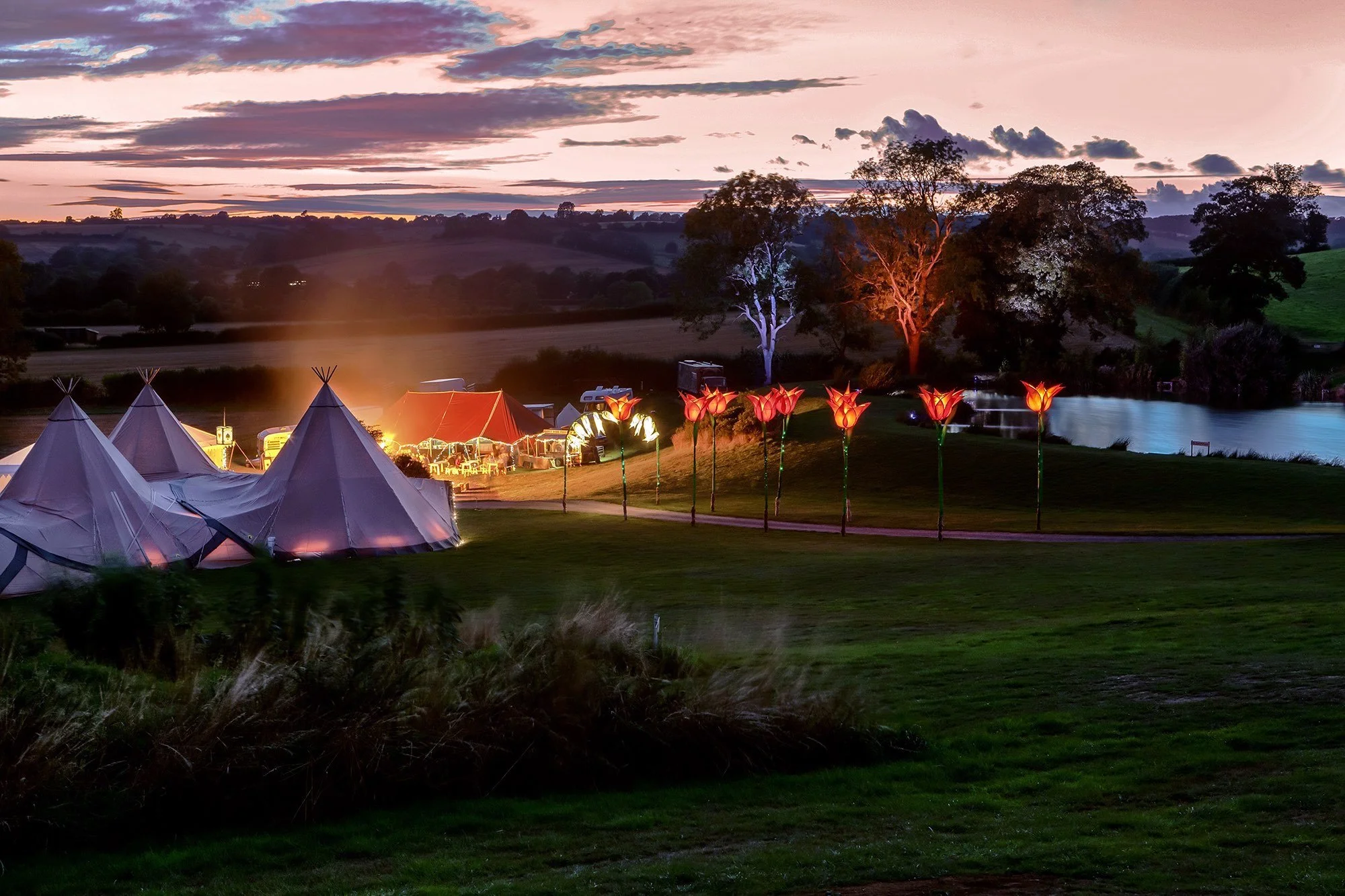
As the infrastructure locks in, the atmosphere starts to shift. Lighting softens the edges, communal spaces take form, and the place begins to feel less like a worksite and more like a small, self-contained village with a sense of calm.
By the time guests arrive, the heavy lifting is done and the generators hum quietly in the background. What looks effortless is really precision logistics — a carefully choreographed build that turns open land into a temporary hotel, ready for hundreds of people to feel right at home.