
Inside the Build: How a Glamping Site Comes to Life
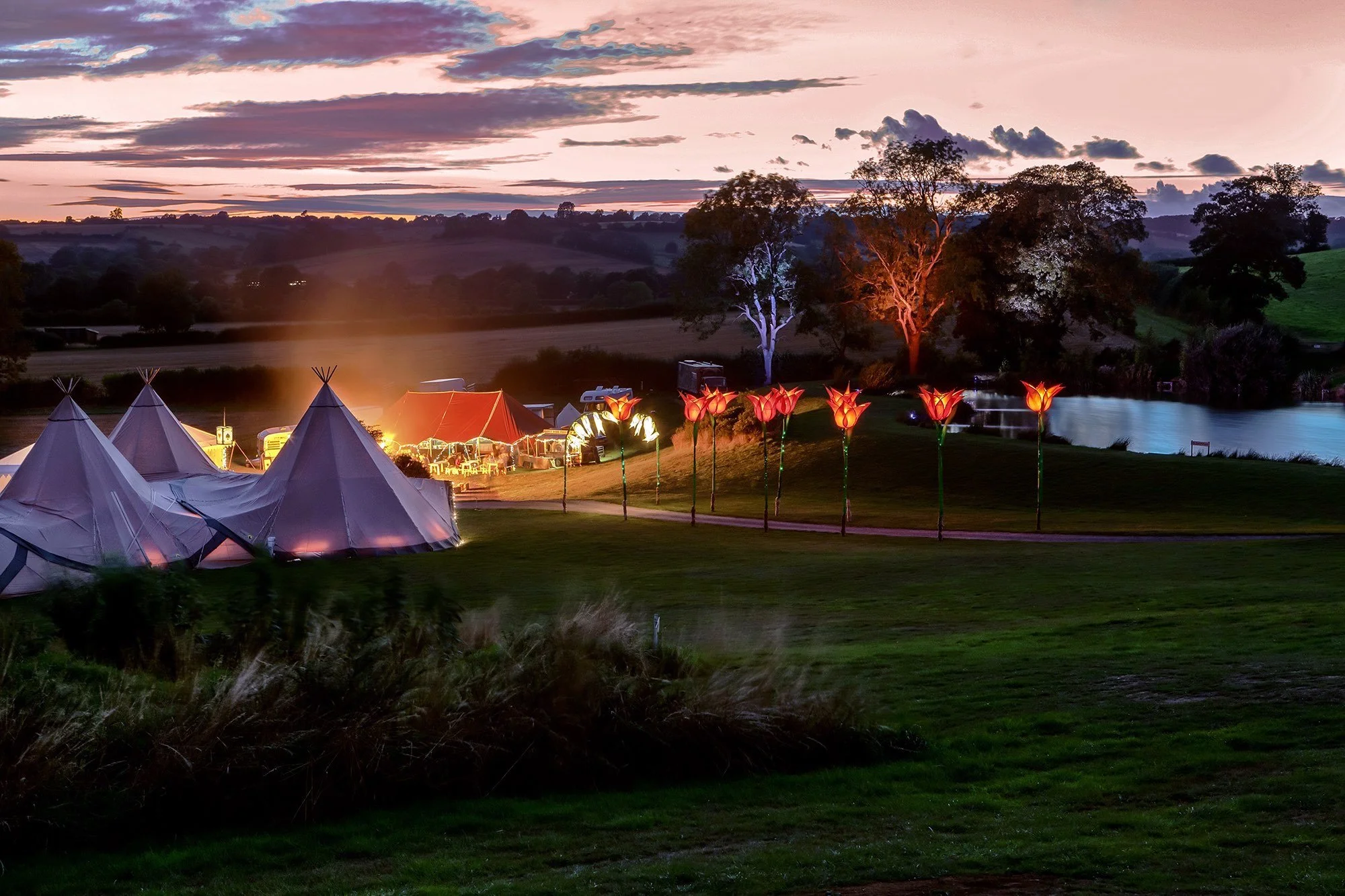
Every build starts the same way. An empty field. Sometimes it's flat and cooperative. More often it's uneven, muddy, or awkwardly shaped. Within days, that field needs to become a fully functioning glamping site accommodating hundreds of people.
That transformation doesn't happen through improvisation. It requires planning, precision, and teams who've done this enough times to anticipate problems before they materialise.
Before the First Truck Arrives
The build doesn't start when crews arrive on-site - it starts weeks earlier with site maps, access route planning, risk assessments, and detailed timelines coordinating multiple teams across compressed schedules.
Site layout determines everything that follows. Where do tents go to maximise space whilst maintaining privacy? How do vehicles access the site without churning grass into mud? Where do communal areas sit to feel natural rather than arbitrary? How does water and power infrastructure route efficiently without visible cables snaking everywhere?
The layout needs to work for multiple audiences simultaneously. Guests want accommodation that feels relaxed and spacious. Crews need clear access routes for equipment and efficient workflows during setup and breakdown. Caterers (like Melt Events, our sister company, providing food and beverage at festivals) require functional kitchen spaces positioned logically relative to dining areas. Site managers need visibility across the entire operation.
Getting that balance right requires experience. First-time site planners underestimate space requirements, misjudge access needs, or create bottlenecks that become obvious only when hundreds of people arrive. After years of building festival glamping sites, we've learned what actually works versus what looks good on paper.
The Build Starts
Build day starts early. Trucks arrive in convoy carrying tents, furnishings, infrastructure equipment, tools, and supplies. Everything's been loaded in sequence so items needed first come off trucks first.Get the loading sequence wrong and you’re just wasting time on site.
The site transforms quickly once crews start working. Plots get pegged out according to pre-planned layouts. Ground sheets go down. Tent frames go up. Canvas gets pulled tight and secured. What looks like organised chaos to outsiders is actually carefully choreographed workflow where each team knows exactly what they're doing and when.
Speed matters, but precision matters more. A tent pitched poorly will cause problems throughout the event. Uneven ground creates uncomfortable sleeping conditions. Loose guy ropes become trip hazards. Inadequate drainage means tents flood when it rains. Getting it right first time prevents issues that are exponentially harder to fix once guests arrive.
Infrastructure: The Invisible Foundations
As tents go up across the site, infrastructure teams work on systems guests will never see but absolutely rely on., infrastructure teams work on systems guests will never see but absolutely rely on.
Electrical teams run cables, install distribution boxes, connect lighting, and test power to every tent and communal area. Power requirements vary (our customers have a wide variety of options they can book in advance), and the system needs to handle peak load without tripping breakers at inconvenient moments.
Plumbing teams establish water supply and drainage. Some sites connect to mains supply. Others require tankers and pumping systems. All require thought about water pressure, distribution points, and grey water management that meets environmental and health regulations.
Lighting teams create atmosphere as much as functionality. Pathways need illumination for safety. Communal areas need ambient lighting for socialising. The balance between adequate light and maintaining outdoor ambience takes judgement.
These teams work interdependently. Electricians need plumbers finished in certain areas before running cables. Lighting installation follows electrical infrastructure. Everyone's working to the same timeline, and delays in one area cascade through others.
Furnishing: Creating Comfort
Once tents and infrastructure are in place, furnishing teams transform empty canvas shells into accommodation.
For basic packages, that's straightforward (mattresses, minimal furnishings, essential amenities). For luxury packages, it's extensive (real beds, wooden furniture, rugs, lighting, mirrors, welcome packs, styling details that create boutique hotel atmosphere under canvas).
Quality control happens here too. Is bedding fresh and properly presented? Are furnishings clean and damage-free? Do all amenities work as intended? Problems caught during furnishing are fixable. Problems discovered by guests are embarrassing.
Communal Spaces: Where Community Happens
Glamping sites aren't just collections of tents. They're temporary villages where guests interact, socialise, and build shared experiences.
Communal areas require particular attention. Seating arrangements that encourage conversation without forcing intimacy. Lighting that creates atmosphere without being dim. Layout that flows naturally rather than feeling staged.
At festivals where Melt Events provides food and beverage, our shacks and bars become natural gathering points. The integration between accommodation and food/beverage service happens during the build, ensuring everything positions logically and creates coherent site atmosphere.
Fire pits, outdoor seating areas, chill-out zones, information points all get positioned during this phase. The goal is creating spaces that feel like they've always been there rather than obviously constructed.
The Coordination Challenge
Team coordination requires constant communication. Site radios, team briefings, progress updates, problem-solving on the fly. When issues emerge (delivery delays, weather disruptions, equipment failures), the entire schedule adjusts in real-time.
No build goes perfectly. Equipment breaks. Weather intervenes. Deliveries arrive late or incomplete. Materials turn out different than expected. Teams get sick or injured. The difference between professional operations and amateur ones is how smoothly these inevitable problems get absorbed and resolved.
The Final Phase: Atmosphere
As the build nears completion, attention shifts from function to atmosphere. The heavy lifting is done. Now it's about creating the feeling guests will experience.
Pathways get cleared and marked. Signage goes up. Welcome areas get staged. Music might play softly in communal spaces. Lighting gets fine-tuned for ambience. Small styling touches appear (plants, decorations, thoughtful details that signal care).
This phase can't be rushed. It's the difference between a site that works and a site that feels special. Guests won't consciously notice most of these details, but they'll feel the cumulative effect.
Final walkthrough happens here. Site managers inspect every tent, check all infrastructure, test systems, identify anything that needs adjustment. Problems get fixed before guests arrive, not after.
Opening: When It All Comes Together
By the time guests arrive, the site hums quietly. Generators run in background. Lighting creates warmth. Tents stand ready. Communal areas invite exploration. What looks effortless is actually precision logistics and years of accumulated knowledge about what works.
Guests see the finished product. They don't see the 5am starts, the problem-solving under pressure, the coordination between multiple teams, or the countless decisions that created the experience they're now enjoying.
That invisibility is the goal. When builds go well, guests feel like they've discovered a magical place that just exists. They don't think about the fact that it was an empty field days earlier.
Beyond the Build
Building temporary glamping sites matters beyond immediate commercial success. It's about creating spaces where people gather, celebrate, rest, and build memories. Whether that's festival-goers staying at Hotel Bell Tent or Perfectly Pitched Camping, corporate teams on retreats, or wedding guests celebrating milestones.
The build creates the foundation for all of that. Done poorly, it undermines everything. Done well, it becomes invisible infrastructure enabling experiences people remember.
At Hotel Bell Tent, we've built hundreds of glamping sites over more than a decade. We've learned what works through trial, error, and continuous refinement. That accumulated knowledge informs every build, every site plan, every team coordination decision.
The field-to-village transformation still feels remarkable every time. But it's not magic. It's planning, precision, teamwork, and experience applied under pressure to create something genuinely special.
Hotel Bell Tent builds temporary glamping sites for festivals, corporate events, and private celebrations. Working alongside Melt Events for food and beverage, and Perfectly Pitched Camping for accessible accommodation options.